TreeMuse
The Plant Music Device from FriendShip with Nature e.V.
We use it in schools, generally in groups and research projects.
Plant Music
with the
TreeMuse
What the TreeMuse is
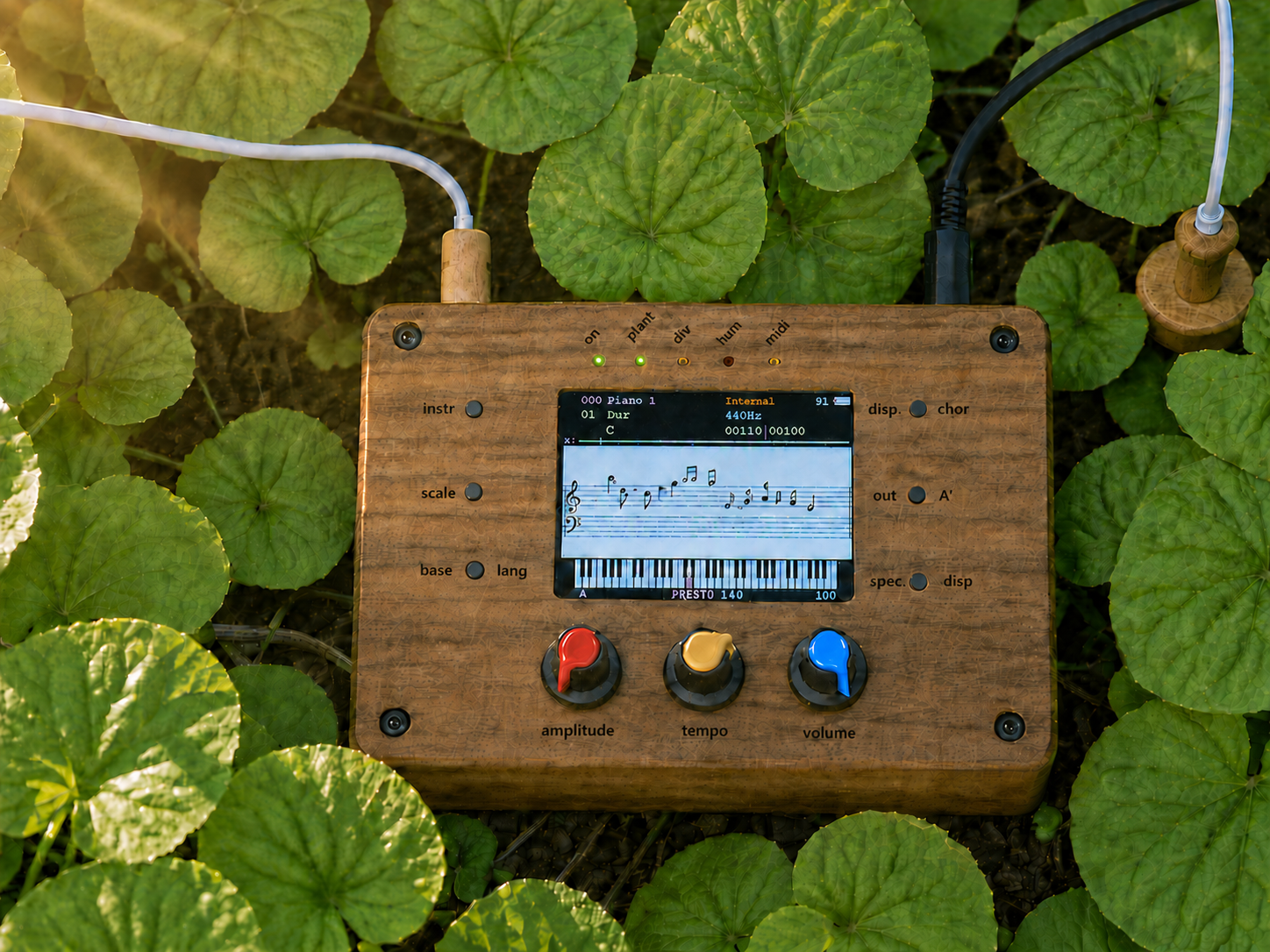
The TreeMuse makes subtle electrical changes in plants and fungi audible as music. Using an electrode attached to a leaf and a probe inserted into the soil, it detects changes in their electrical potential and translates them directly into sounds. In this way, music emerges from the living activity of the plant.
How plant music is created
Instrument, key, fundamental note, tempo and sound character can be adjusted. An external speaker can also be connected. Through its digital MIDI interface, the plant can even play an electronic piano, a music box or other musical instruments. The display shows notes, a keyboard or the changing plant signal.
What the TreeMuse makes possible
The TreeMuse invites us not only to observe plants, but also to listen to them attentively. It opens up new possibilities for experiencing nature, education, creative projects, concerts and research. For children and young people in particular, plant music can become a bridge: curiosity gives rise to wonder and mindfulness, as well as a sense of encountering plants as living beings.
Here are some very different sound examples of the plant music generated by
TreeMuse
Music from the Ginkgo Tree
Here we hear the music of the ginkgo tree in the herb garden at Weizberg. The recording was made during a herb tour with plant music on 11.08.2025
A cushion primrose
Gentle electronic tones flow and shift like a cautious awakening – a quiet, somewhat mysterious spring conversation between the primrose, light, and earth.
A wild rose
Bright, sparkling tones rise above warm, deeper sounds – free, searching and alive, like a delicate conversation of the wild rose with its surroundings.
The music of a forest clearing full of snowdrops
Bright, gentle electronic tones ripple through the space in small waves – almost like individual sound sparks awakening between the white flower bells and responding to one another.
The music of an older blooming pear tree
Bright, bell-like tones ripple freely – sometimes hesitantly and attentively, sometimes lively and playfully – like a quiet dialogue of light points, in which the blooming pear tree does not actually sing, but responds in small musical signs.
The music of a young silver fir
This young white fir stands at the edge of the forest among mature firs next to a small woodland chapel with a healing spring.
Acquire TreeMuse